


Anemone
Add A True Garden Gem To Your Borders With Anemones
If you're looking to add vibrant colour and a delicate, natural movement to your British garden, you'll love planting Anemone bulbs (corms). These elegant flowers bloom in vivid shades of blue, pink, red, and white, creating a cheerful display that brightens your borders after winter. Their blooms can last for over a month! As Anemones begin to flower, they bring warmth and energy just when your garden needs it most.
Whether you're new to planting bulbs or an experienced gardener seeking reliable (early) spring colour, Anemones offer an effortless way to revitalise your outdoor space. Purchase Anemone bulbs from DutchGrown’s extensive range from Holland and watch your garden burst into vibrant life.
Showing 1 - 3 in 3 items



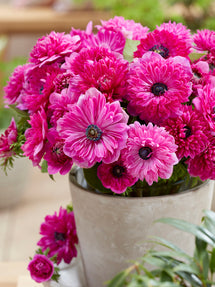
Anemones: Low-Maintenance Plants That Bloom Throughout The Entire Spring Season
Anemones are easy-to-grow plants that require minimal care. There’s no need to worry about complicated maintenance. When planted in spring, Anemone bulbs establish themselves quickly in the soil and burst into glorious colour from late spring through to mid-summer, depending on the variety.
Anemones are ideal for beds, borders, containers, cottage gardens, wildlife gardens, or cut-flower gardens. They adapt well to both sun and partial shade, provided the soil is free-draining. Once planted, they use the sunlight they receive to create energy and develop strong roots, which support an abundance of vibrant blooms throughout the growing season. With Anemones flowering steadily from early spring—often producing up to 20 flowers per bulb—you’ll enjoy a long-lasting display that carries your garden beautifully from one month to the next. Anemones also make excellent cut flowers for bouquets.
Beautiful Varieties: From Anemone Nemorosa (Wood Anemone) To Anemone Coronaria
Anemones come in a wide array of shades and flower forms, giving you plenty of choice for your garden. Varieties include Anemone ‘Nemorosa’ (wood Anemone), Anemone ‘Coronaria’, and Anemone ‘Hupehensis’ (Japanese Anemone).
Proven Winners: Anemone Fullstar And Galilee
Among the most admired groups are the proven winners ‘Fullstar’ and ‘Galilee’, each offering distinctive colours and textures to suit a variety of garden styles.
- Anemone ‘Fullstar’: The ‘Fullstar’ varieties provide a rich, luxurious appearance. These Anemones feature fully double blooms with layers of soft, ruffled petals in shades of pink, white, blue, and purple. A standout example is Anemone ‘Fullstar Pink’, boasting stunning double pink blooms in late spring and summer.
- Anemone ‘Galilee’: ‘Galilee’ Anemones are known for their refined elegance and sturdy, upright stems. Their blooms often display a deep, concentrated colour at the centre that fades gently towards the edges of the petals—an effect that adds depth and richness to your garden display. A striking example is Anemone ‘Galilee Red’, a vibrant red variety with a softer, lighter centre.
How To Grow Anemone Bulbs In The Spring?
Growing Anemones is both simple and rewarding. The steps below will help ensure healthy growth and a steady display of blooms, whether you're planting in borders or containers. You can also refer to our growing guide, ‘How to Plant Anemone Bulbs’, for more detailed advice.
- Preparation: Soak the bulbs (technically corms) in lukewarm water for 2–4 hours before planting. This helps to rehydrate them, encouraging quicker root development once in the soil.
- Location: Select a site with well-drained soil. Anemones thrive in full sun to partial shade. Aim for a spot that receives at least 4–6 hours of sunlight each day.
- Soil: Improve soil drainage by adding organic matter such as compost or well-rotted manure. Anemones prefer slightly acidic to neutral soil (pH 6.0–7.0), so consider testing your soil if unsure.
- Planting depth and spacing: Plant the corms 5–7 cm deep with the pointed end facing downwards. Space them approximately 10–15 cm apart to allow for healthy growth and air circulation.
- Watering: Water thoroughly after planting to help settle the soil and begin root development. Keep the soil consistently moist during the growing season, but avoid overwatering.
- Aftercare: Allow the foliage to die back naturally. The leaves continue to photosynthesise and store energy for the next flowering cycle. In colder regions, if you planted non-Blanda types in late winter or early spring, you may wish to lift and store the corms after flowering if severe frost is expected.
An Extensive Collection Of Anemone Bulbs For Sale At DutchGrown
As you explore Anemone bulbs for your British garden, you’ll soon appreciate the difference that high-quality stock can make. At DutchGrown, we take great pride in offering bulbs carefully selected by experts with decades of horticultural experience. Our collection features top-grade bulbs chosen for their strong root systems, dependable flowering, and vibrant colour. Add timeless spring beauty to your garden with premium Anemone bulbs from DutchGrown.
Looking for Anemones that can be planted in autumn? Explore our wide selection of autumn-planted Anemones, including Anemone ‘De Caen’ and Anemone ‘Blanda’.
Frequently Asked Questions About Anemone Bulbs
Do Anemones Come Back Each Year?
Anemones can return year after year, making them reliable perennial bulbs when planted in suitable conditions. In milder climates, the bulbs can usually be left in the ground to regrow each spring naturally. In colder regions, only Anemone Blanda varieties tend to overwinter successfully. For other types, it's advisable to lift and store the bulbs at the end of the season if severe winter weather is expected, helping to protect them for future planting.
What Month To Plant Anemone Bulbs?
The best time to plant Anemone bulbs depends on your local climate. Only Anemone Blanda varieties can tolerate freezing temperatures and should be planted in autumn in all regions. In cooler areas, non-Blanda types should be planted in late winter or early spring, once the soil begins to warm.
What Happens If You Don't Soak Anemone Bulbs?
Soaking Anemone bulbs is one of the most effective ways to encourage quicker growth. Place the bulbs in room-temperature water for 2–4 hours to rehydrate them and help stimulate root development. For even faster results, you can pre-sprout the bulbs by placing them in damp peat moss or vermiculite and keeping them in a cool, dark place for around 10 days before planting.
Do Anemones Like Full Sun Or Shade?
Anemones thrive in full sun to partial shade, making them easy to position in most gardens. Choose a spot that receives 4–6 hours of sunlight per day to encourage strong root development and vibrant flowering.