


Actaea (Baneberry)
Actaea: the fully hardy, striking jewel of the partially shaded garden
Actaea, also known as ‘Baneberry’, ‘Bugbane’ or ‘Cimicifuga’, brings a sophisticated, architectural presence to your garden, serving as an elegant perennial that thrives in shade. Much admired for its tall, airy flower spires, this genus is a favourite among gardeners seeking to add drama to shaded areas. Whether you wish to brighten a woodland garden or introduce texture to a shaded border, these resilient plants offer a charm that transforms ordinary corners into something rather special. Explore our carefully curated selection of top-sized Actaea bare roots and begin transforming your British garden for a stunning summer and early autumn display.
Showing 1 - 2 in 2 items
What is Actaea?
Actaea is a genus of eight species of woodland perennials native to the temperate and subarctic regions of the Northern Hemisphere. As members of the Ranunculaceae family, these plants have formed part of both North America’s natural landscapes and European horticulture for centuries. Today, gardeners prize Actaea primarily for its ornamental value, as it provides reliable structure and late-season interest in damp, shaded settings.
The beautiful key characteristics of Actaea
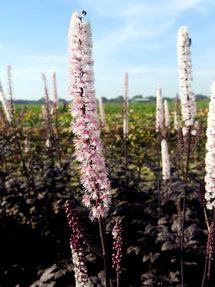
The defining feature of Actaea lies in its deep bronze or rich green foliage, composed of large, toothed leaves with clearly defined margins. These generous clumps create a dense, herbaceous backdrop that remains attractive throughout the growing season.
Rising above this foliage, sturdy stems bear soft, feathery white blooms that seem almost to glow in low light. Their height and airy form introduce movement and vertical interest without appearing heavy or overpowering.
The perfect match: who should plant Actaea?
Actaea is an excellent choice for those who favour a romantic, layered aesthetic in naturalised settings. Its delicate texture and late-season flowering help to fill the gap when many other shade-loving plants begin to fade. Actaea is particularly suitable to:
- Shade Gardeners: If you have a challenging shaded area beneath a canopy of trees, Actaea thrives in the low light levels that many other perennials struggle in.
- Floral Designers: Varieties such as Actaea Simplex ‘Pink Spike’ offer dark, chocolate-toned foliage and long stems, providing striking contrast and height in refined floral arrangements.
- Woodland Enthusiasts: These woodland perennials are ideal for creating a lush, forest-floor effect and return with increasing vigour year after year.
From Actaea Racemosa to Actaea Pachypoda and Actaea Simplex
Whilst all members of this genus share a certain elegance, different species and cultivars offer a pleasing range of colours and forms for the garden. Actaea ‘Racemosa’, for instance, produces tall, wand-like white flowers in mid to late summer. Actaea ‘Pachypoda’ is noted for its distinctive white berries with black ‘pupils’, held on thick red stems. Actaea ‘Simplex’, a later-flowering species, bears fragrant blooms and includes a number of popular dark-leaved cultivars.
At DutchGrown, you'll find several of the following varieties:
- Actaea simplex ‘Pink Spike’: Finely divided, rich chocolate-purple foliage provides the perfect backdrop for graceful, arching wands of fragrant pink flowers, which appear in late summer and continue into autumn.
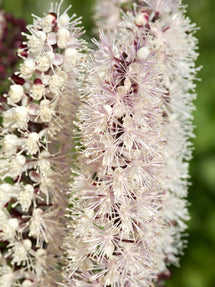
- Actaea simplex ‘Chocoholic’: This variety is distinguished by its fragrant, bottlebrush-like flowers in soft mauve-pink, gradually fading to near white as they mature. It also features striking bronze-purple, finely cut foliage.
What are the growing conditions for Baneberries?
Success with Actaea begins by recreating its natural woodland habitat. These plants benefit from a little care to truly thrive. Here is how to plant and grow Actaea successfully:
- Timing: Plant Actaea bare roots in spring, once the risk of frost has passed.
- Position: Choose a spot in full or partial shade. Avoid strong full sun, which may scorch the leaf margins.
- Soil: Plant in humus-rich, well-drained soil. Incorporating leaf mould or garden compost will help improve (clay) soil structure and fertility.
- Planting Depth: Set each bare root approximately 2.5 cm below the soil surface.
- Moisture: Actaea prefers consistently moist soil and requires about 2.5 cm of water per week. Take care not to let the soil dry out during dry periods.
- Maintenance: Generally low-maintenance, Actaea benefits from removing spent flowers and cutting back in late autumn.
- Division: Lift and divide the established root system every few years in early spring to maintain vigour and encourage healthy growth.
Top-quality Baneberry bare roots available at DutchGrown
To ensure your Actaea performs at its best, it is essential to begin with high-quality plants. At DutchGrown, you can purchase top-sized Baneberry bare roots (and from other plants) that offer excellent vigour and reliable establishment. By choosing our company, you are selecting plants supported by generations of Dutch horticultural expertise and a longstanding commitment to quality.
Invest in the lasting beauty of your shade garden. Choose your favourite Actaea varieties from our collection and discover the difference that premium quality can make to your garden. We ship throughout the United Kingdom.
Frequently asked questions about the Actaea plant
Does Actaea like sun or shade?
Actaea thrives in partial to full shade, as these woodland perennials naturally flourish in dappled light beneath tree canopies. Whilst they can tolerate some morning sun in cooler climates, strong afternoon sun may scorch their foliage.
What is the common name for Actaea?
‘Baneberry’ is the common name for the Actaea genus, though specific species are often called ‘Bugbane’ or ‘Cimicifuga’. Some Actaea is highly prized for its fragrant blooms, which emit a sweet, perfumed scent often compared to grapes, honey or Jasmine.
What is the height of Baneberries?
Depending on the species and variety, Actaea plants typically reach a height of around 125 cm. These architectural perennials produce tall, slender stems that carry fragrant flower spires well above their dense foliage. This upright habit makes them an excellent choice for adding vertical interest to the back of a shaded border or within a woodland garden.
What are the different species of Baneberries?
Actaea species offer a diverse range of ornamental forms. Actaea ‘Racemosa’ (Black Cohosh) produces tall spires of white flowers. Actaea ‘Pachypoda’, commonly known as ‘Doll’s Eyes’, is notable for its distinctive white berries with dark centres, whilst Actaea ‘Rubra’ bears striking red berries. Gardeners also favour Actaea ‘Simplex’ for its fragrant, late-season blooms and attractive foliage.