


Asters (Michaelmas Daisies)
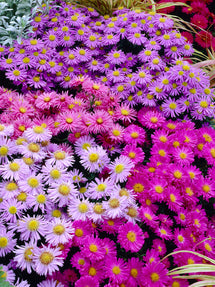
Asters, also known as Michaelmas Daisies, are hardy perennial plants grown for their masses of daisy shaped flowers from late summer into autumn. They are especially useful for bringing colour to borders later in the season, while also providing flowers for bees and other pollinators. Our Asters are supplied as bare root plants for spring planting. Choose from compact varieties for the front of borders and taller asters for mixed and cottage garden planting, in colours ranging from white and soft pink to lavender and blue.
Showing 1 - 6 in 6 items
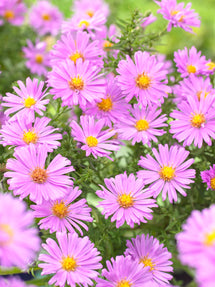
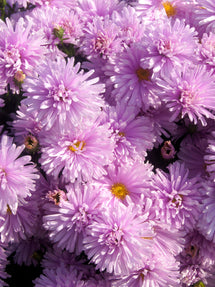
Growing Asters and Michaelmas Daisies
Asters, commonly known as Michaelmas Daisies, are perennial garden plants valued for flowering from late summer into autumn. Their daisy shaped flowers appear at a time when many earlier flowering perennials are beginning to fade, making them especially useful for extending colour in borders towards the end of the gardening season.
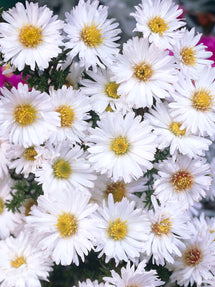
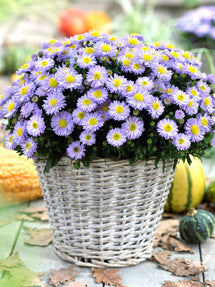
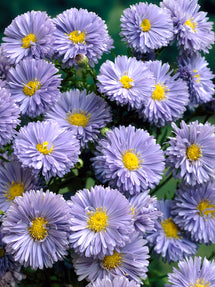
Depending on the variety, Asters can produce flowers in white, pink, lavender, purple and blue tones. Some remain compact and work well towards the front of a border, while taller varieties are useful through the middle and back of perennial planting schemes. They fit particularly well into cottage gardens, mixed borders and wildlife friendly planting.
Where to plant Asters
Asters generally perform best in a position with plenty of light. Full sun is ideal for most varieties, although many will also tolerate some partial shade.
Choose soil that drains reasonably well while still retaining enough moisture to prevent the roots from drying out for long periods. Good air movement around the plants is also useful, particularly once they develop into established clumps.
Asters combine well with ornamental grasses and other late flowering perennials, helping to keep borders colourful as summer moves into autumn.
Planting Aster bare root plants
DutchGrown supplies Asters as bare root plants for spring planting.
Bare root plants arrive dormant, so they may not look like established plants when you first unpack them. This is completely normal. Plant the roots soon after arrival and water them well after planting so that the soil settles around the roots.
New growth develops as temperatures rise and the plants come out of dormancy. Keep newly planted Asters watered during dry periods while their root systems become established.
Are Asters good for bees?
Asters are particularly useful plants for pollinator friendly gardens because they flower relatively late in the year. Their open flowers are visited by bees and other insects searching for nectar and pollen when fewer plants may be flowering elsewhere in the garden.
Planting several Asters together can create a particularly useful patch of late season flowers while also giving a stronger visual display in the border.
When do Asters flower?
Most garden Asters flower from late summer into autumn, although the exact flowering period depends on the variety, weather and growing conditions.
Because they flower later than many traditional border perennials, Michaelmas Daisies are an excellent choice for gardeners who want to extend the flowering season well beyond midsummer.
Browse our Aster and Michaelmas Daisy collection above to choose the varieties that best suit your garden.