


Polianthes (Tuberose)
Polianthes (Tuberose): the sweet fragrance for your summer garden
Tuberose is one of those flowers you don’t simply see in a garden, you experience it. These tall, elegant stems bear blooms that release a rich, unforgettable fragrance. If you’re aiming for a summer garden that feels refined, personal, and truly memorable, Polianthes deserves a place on your list.
At DutchGrown, we specialise in top-quality, top-sized bulbs selected for genuine garden performance. If you enjoy planting bulbs and watching them flourish into something exceptional, explore our collection. We’ll guide you through choosing, planting, and growing Tuberose bulbs with confidence in your British garden.
Showing 1 - 4 in 4 items
What is Tuberose? Nature’s most intoxicating perfume
The Tuberose plant is related to the Lily and belongs to the Asparagaceae family. It grows from bulb-like tubers, often simply called bulbs, and is prized for its tall flower spikes bearing creamy white, pink, or reddish-purple blooms, along with a powerful, sweet, heady, and exotic fragrance.
Tuberose flowers are renowned for their rich scent and tall, upright growth habit. Plant Polianthes in spring, wait patiently through early summer, and you’ll be rewarded with a display that feels almost indulgent: beautifully scented blooms that fill your garden with perfume.
What is the origin of Tuberose bulbs?
Polianthes Tuberosa, commonly known as Tuberose, is a perennial plant native to Mexico.
When it was introduced to Europe, growers quickly fell in love with its striking beauty and exquisite fragrance. It became a favourite of Louis XIV of France, who had it planted in abundance at the Palace of Versailles.
The key characteristics of Polianthes
Polianthes produces clusters of substantial, pristine blooms that emit a remarkably captivating fragrance. If you’re looking for one of the most fragrant flowers you can grow from bulbs, this is a true classic.
Here’s what makes the Tuberose flower stand out in the garden:
- A high-impact fragrance: Sweet, creamy, and exotic, with a strong and lingering presence.
- Tall stems and defined form: Ideal for introducing vertical interest and structure to borders.
- Late-season flowering: Blooms often peak just as many early-summer flowers begin to fade.
- Tender perennial: Tuberose is hardy in the UK, where winter temperatures generally remain above –6°C.
- Striking blooms on tall stems: Tuberose stems can reach up to 1 metre, adding elegance and height to summer displays.
- Versatile growing potential: Naturally suited to warmer climates, but it can thrive in cooler regions too, provided it has a sunny, sheltered spot and consistent warmth.
Which type of gardener would enjoy growing Tuberose?
Polianthes fits seamlessly into both traditional and contemporary garden designs, and is particularly striking when planted along walkways, where its beauty and fragrance can be fully appreciated.
You’ll enjoy growing Tuberose if you’re looking for:
- A summer flower with a romantic, elegant appearance.
- A highly fragrant bloom that adds a sensory dimension to the garden.
- A tall plant that brings structure and height to mixed borders.
- A container-friendly bulb ideal for a sunny patio or terrace.
Purity and romance for bridal bouquets
Tuberose is a very popular commercial cut flower due to its long vase life and ability to retain its strong fragrance after cutting. It’s frequently used in bridal bouquets, where it symbolises purity and romance.
What are the different varieties of Tuberose?
Tuberoses are primarily classified by the number of petal layers they possess and the colour of their foliage. While traditional varieties are pure white, modern breeding has introduced a range of hybrids, including richly coloured and variegated forms. At DutchGrown, you’ll find the following exquisite varieties:
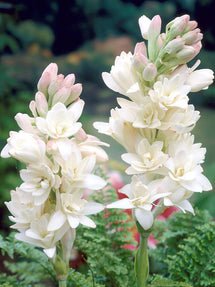
- Tuberose ‘The Pearl’: This variety produces elegant spikes of creamy white flowers and is sure to be a standout feature in your summer garden.
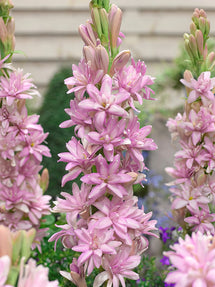
- Tuberose ‘Chia Nong Pink Sapphire’: Boasting soft lilac, double blooms on tall stems reaching 90–120 cm, this variety adds subtle charm and height.
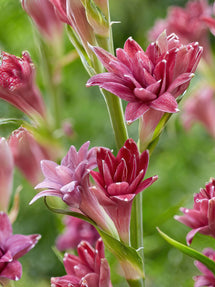
- Tuberose ‘NCYU LOVE’: With enchanting reddish-purple flowers, this Polianthes variety brings a romantic note to your garden borders or containers.
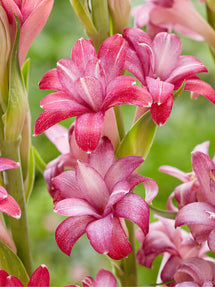
- Tuberose ‘NCYU CHERRY’: A striking member of the Polianthes Tuberosa bulbs group, this cultivar features vibrant cherry-red blooms on upright flower spikes.
How to grow thriving Tuberose plants
Once you've mastered the basics, Tuberose becomes a reliable summer bloomer, offering exquisite flowers and a rich, heady fragrance. Follow the steps below or refer to our growing guide, ‘How to grow Tuberoses’.
- Time: Plant Tuberose bulbs outdoors in early spring, once the risk of frost has passed and daytime temperatures consistently exceed 21°C.
- Location: Tuberose thrives in full sun. Choose a position that receives strong sunlight for most of the day and is sheltered from strong winds.
- Soil: Polianthes prefer well-drained soil. If your garden soil tends to retain water, improve drainage before planting. Growing in containers? Start with a high-quality, free-draining compost and use pots with adequate drainage holes.
- Depth and spacing: Plant bulbs 20–25 cm apart, covering them with 5–7 cm of soil.
- Watering: Water regularly during the active growing period, particularly in dry spells. Aim to give the plants around 2–3 cm of water once or twice a week. Keep the soil evenly moist but not waterlogged, as soggy conditions can lead to bulb rot.
- Feeding: Apply a balanced fertiliser once a month during active growth.
- Aftercare: Once the foliage begins to yellow in October, clip the leaves, dig up the bulbs, and store them for winter. Allow the plant to rest for a few months before starting the next growing cycle.
- Winter care: To store Tuberose bulbs over winter, maintain a temperature range of 21–24 °C, as recommended in most Tuberose care guides. Alternatively, you can air-dry the bulbs for 7 to 10 days before storing them in a cool place at 10°C for replanting in the spring.
Tuberose plants typically flower from mid to late summer, around 90 to 120 days after planting. By starting early in spring, you can expect blooms to appear by late summer.
Top-quality Polianthes Tuberosa for sale at Dutchgrown
When it comes to Polianthes, bulb quality truly matters. At DutchGrown, you’ll find top-sized bulbs, carefully selected and cultivated for strong performance in the garden.
If you're searching for Tuberose bulbs that feel both exclusive and dependable, explore our curated collection and choose the varieties that best suit your garden style. Plant them in spring, give them plenty of sun and warmth, and let Tuberose fill your summer evenings with its unmistakable fragrance. We deliver across the United Kingdom.
Frequently asked questions about Polianthes
What does Tuberose smell like?
The overwhelming fragrance of Tuberose is often described as intoxicating and can fill a room with its scent. Tuberose has a sweet, floral fragrance frequently likened to Jasmine or Gardenia, but with a deeper, more opulent character. You’ll detect a creamy, velvety richness—almost buttery in quality—balanced by a gentle, spicy warmth, with subtle hints of honey, musk, and clove-like notes.
What is another name for Tuberose?
Tuberose is also known by its botanical name, Polianthes Tuberosa, though in more recent classifications, you may see it listed as Agave Amica.
Do Tuberoses like sun or shade?
Tuberose plants thrive in full sun, so choose a planting spot that receives strong sunlight for most of the day. You’ll enjoy sturdier stems, more beautiful blooms, and the most fragrant flowers when they’re grown in a warm, sheltered location protected from the wind.
Can you grow Tuberose in the UK?
You can grow Tuberoses in the UK. Plant Tuberose bulbs in spring, once the risk of frost has passed. Place them in well-drained soil in a sunny spot. As they die down, stop feeding, reduce the water, and ensure the bulbs are either lifted or moved to frost-free conditions during winter.