

Delphiniums (Larkspurs)
Give your British garden a burst of colour and elegance with Delphiniums
Delphiniums are among the most striking plants you can grow in your British garden. With their tall, vibrant spikes with many flowers, vivid hues, and unmistakable presence, Delphiniums add structure, rhythm, and a touch of romance to borders and flowerbeds. This flowering perennial is ideal for gardeners who appreciate enduring quality, thoughtful curation, and plants that reward attentive care with outstanding performance.
At DutchGrown, you'll find premium-quality Delphinium bare roots for gardening enthusiasts across the United Kingdom. Our carefully curated collection ensures you receive only the healthiest, most vigorous roots for your garden. Explore our range and begin planting in early to late spring for a beautiful early summer to mid-summer garden.
Showing 1 - 5 in 5 items
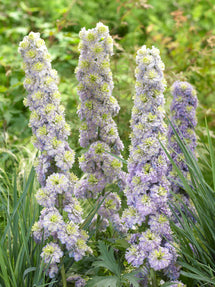
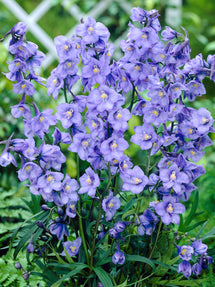
Delphiniums (Larkspurs)
Larkspur vs. Delphinium
Delphiniums are flowering plants belonging to the genus Delphinium (family Ranunculaceae), prized for their tall flower spikes and dense clusters of vibrant blooms. They are commonly known as ‘Larkspur’ and include both (short-lived) perennial and annual species.
Although not all plants referred to as Larkspur belong to the Delphinium genus, Delphinium itself comprises around 300 species of flowering plants, native to the Northern Hemisphere and high-altitude mountainous regions. The genus name Delphinium is derived from the Ancient Greek word 'delphis', meaning dolphin, due to the shape of the flowers.
The visual and ecological value of Delphiniums in the British garden
Choosing Delphiniums brings both visual appeal and ecological benefits to your garden. These striking single or double flowers come in a wide range of captivating shades, from rich blues and purples to soft pinks, crisp whites, and beyond. Delphiniums can grow to heights of 1 to 2 meters, depending on the species, adding vertical interest to garden borders. This architectural quality makes them perfect for introducing depth to flowerbeds, creating eye-catching focal points, or filling spaces in larger planting schemes.
Delphiniums are also a favourite among pollinators, attracting bees, butterflies, and hummingbirds while being rabbit- and deer-resistant.
The best garden settings for Larkspurs
Delphiniums are among the most cherished flowers for many gardeners. Depending on your needs and gardening style, these blooms can suit a wide range of garden types. Here’s how they fit in:
- Gardeners with some experience who enjoy staking, feeding, and deadheading.
- Cottage gardens and formal borders where height and structure are important.
- Large flower beds and mass plantings that benefit from vertical emphasis.
- Pollinator-friendly gardens that attract butterflies and hummingbirds.
If you experience cool summers, Delphiniums can become beloved plants that help define your garden’s character. It's essential to note that certain Delphinium species are toxic and should be grown with caution near children and pets.
What are the different colours of Delphinium flowers?
Although Delphiniums are best known for their blue blooms, they also appear in shades of pink, purple, white, and other hues. Below are some popular varieties:
- Delphinium ‘La Bohème’: This variety features striking violet buds that open to reveal a layer of frilled white petals, creating a striking contrast against the deep blue.
- Delphinium ‘Pink Sensation’: With its delicate pink-silver flowers, this variety is an ideal choice for gardens in need of a soft, charming focal point.
- Delphinium ‘Highlander Rainbow Sensation’: Noted for its multicoloured blooms, this variety displays a range of shades from pink and lilac to creamy yellow.
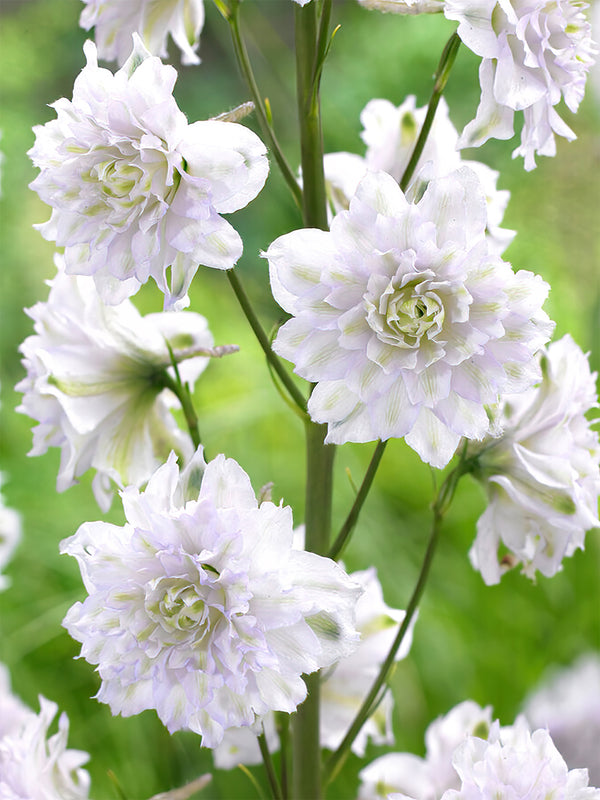
- Delphinium ‘Highlander Cha Cha’: The double flowers of Cha Cha are a soft white with pale green centres. As the blooms mature, they gradually turn a light pink.
How to grow Delphinium plants: tips for success
Delphiniums are relatively easy to grow with the right care. Here’s how to help them thrive in your garden:
- Timing: Spring is the ideal time to begin planting.
- Location: Delphiniums prefer full sun in areas with cool summers and benefit from shelter against strong winds. While they tolerate some light afternoon shade, they should receive at least 6 to 8 hours of sunlight each day.
- Soil: A well-drained soil with a pH between 6.0 and 7.0 is ideal. If your soil is heavy or clay-based, incorporate horticultural grit to improve drainage.
- Planting depth: Plant each bare root approximately 5 cm deep, allowing for five roots per m2.
- Staking: Tall varieties often require staking to prevent them from toppling under the weight of their blooms.
- Watering: Keep the soil evenly moist, but avoid overwatering. Good drainage is key.
- Feeding: Delphiniums are heavy feeders and benefit from weekly feeding with a balanced fertiliser.
- Maintenance: Remove spent flowers regularly to encourage continued blooming. Deadheading promotes a tidy appearance and prevents unwanted self-seeding.
- Pests and diseases: Be vigilant for signs of powdery mildew, crown rot, leaf miners, aphids, slugs, and snails.
- Winter care: Roots may be left in the ground over winter. Apply a layer of mulch in autumn before the first frost to protect the crown.
Buy top-quality Delphinium online at DutchGrown
At DutchGrown, we are proud to offer a beautiful selection of premium Delphinium varieties, carefully chosen for their exceptional quality and beauty. With over 140 years of experience, we ensure that every bare root you purchase meets the highest standards. Explore our stunning collection and transform your garden with these breathtaking, high-quality blooms. We offer delivery throughout the United Kingdom.
Frequently asked questions about Delphiniums
Does Delphinium come back every year?
Delphiniums are short-lived perennials, typically returning for 2 to 3 years. With the right care, they can multiply over time. Every 2 to 3 years, lift the roots, remove the old plant, and replant the new shoots that form around the base. This process helps to maintain healthy, vibrant blooms year after year.
Where is the best place to plant Delphiniums?
The best place to plant Delphiniums is in a sunny position that receives at least 6 to 8 hours of sunlight each day, although they can tolerate partial shade. They prefer well-drained soil with a pH between 6.0 and 7.0. Keep in mind that Delphiniums thrive in cooler conditions and require specific care to perform at their best.
Do Delphiniums like full sun or shade?
Delphiniums prefer full sun and should be planted in a position that receives at least 6 to 8 hours of sunlight each day. While they can tolerate partial shade, providing them with ample sunlight will encourage strong growth and vibrant blooms.
How do you keep Delphiniums blooming all summer?
To keep Delphiniums blooming throughout the summer, it’s important to prune and care for them properly. Thin out the side shoots, leaving only two or three strong stems to allow the plant to concentrate its energy on producing flower spikes. Stake the flower stems to support their growth and prevent them from toppling over. Once flowering has finished, cut back the flower spikes to encourage further blooms. With proper care, your Larkspur may flower several times during the season.