


Dictamnus (Dittany)
Add an aromatic touch to your garden with Dictamnus
Dictamnus albus, commonly known as the ‘Gas plant’ or ‘Burning Bush’, is a striking perennial that brings elegance to early summer gardens. These plants create a strong vertical presence in the border, rewarding your patience with refined flower spikes and aromatic foliage that return with increasing beauty each season.
Explore our carefully curated selection of premium Dictamnus albus bare roots and invest in a botanical masterpiece that will enhance your garden throughout the summer months.
Showing 1 - 2 in 2 items
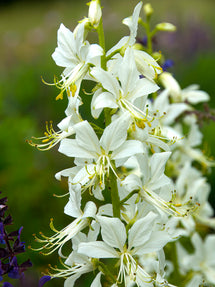

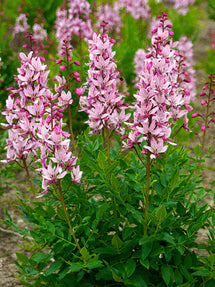
What is Dictamnus Albus?
Dictamnus is a genus of long-lived, woody-based perennials native to regions spanning Europe, North Africa, and Asia. It is a hardy plant and belongs to the Rutaceae family. Often referred to as the ‘Burning Bush’ or ‘Gas plant’, it is valued for both its beauty and its fascinating characteristics.
One of the most intriguing aspects of Dictamnus albus is the flammable oil it produces. In hot weather, the star-shaped seed heads release a volatile vapour that can ignite if a flame is held close to the plant on a still evening.
A masterpiece of form and fragrance: key characteristics
The Gas plant produces tall spires of star-shaped flowers in soft pink or pure white, each bloom marked with delicate veining that lends the plant a refined, almost old-world charm. It flowers from early to mid-summer. After the blooms fade, the plant forms attractive seed heads, whose decorative pods extend its visual interest well into autumn. The foliage is glossy and aromatic, releasing a pronounced lemon-like scent when crushed.
Dictamnus thrives in sunny, well-drained positions and is exceptionally long-lived once established. Although slow to settle, it rewards patience with years of reliable growth and elegant blooms.
Who should grow a Dictamnus plant?
Dictamnus is a low-maintenance plant, making it an excellent choice for a variety of gardening styles, provided the gardener has the patience to allow it to establish. It is particularly well-suited to:
- Cottage gardeners: With its traditional charm and clump-forming habit, it fits beautifully into cottage gardens and mixed borders.
- Sunny borders: Dictamnus thrives in full sun, making it ideal for bright, open positions.
- Classic gardens: As a timeless perennial, it lends structure and elegance to gardens designed for enduring seasonal interest.
Beautiful Burning Bush varieties: from Dictamnus Albus var. to Albiflorus
At DutchGrown, you will find a carefully curated collection of Dictamnus bare roots, perfect for bringing elegance and fragrance to your summer garden. Here are two particularly striking varieties:
- Dictamnus Albus: The classic Gas plant, featuring soft pink petals with delicate lavender veining, creating a subtle bicoloured effect.
- Dictamnus Albus ‘Albiflorus’: A stunning pure white form that seems to glow in the sunlight, offering a crisp, refined look—especially effective in evening gardens.
Both varieties share the same glossy foliage and upright habit, and pair beautifully with companion plants such as Irises, Daylilies, and Peonies.
Planting for a successful garden: how to grow the Gas plant
Dictamnus albus is slow to establish, but if planted in a permanent position and given time to settle, it will reward you with years of reliable growth and elegant blooms. Follow the steps below to plant your Dictamnus:
- Timing: Dictamnus albus bare roots should be planted in spring, once the risk of frost has passed.
- Position: Choose a site that receives at least six hours of full sun each day.
- Soil: Ensure the bare roots are grown in well-drained soil. Keep the soil moisture during the first year. Moderately fertile soil is recommended.
- Soaking: Soak the roots in water for 3–6 hours before planting.
- Depth: Plant the bare root just below the soil surface, approximately 2–3 cm deep, in a prepared hole.
- Watering: Water thoroughly after planting and keep the soil moist during the first year.
- Pruning: Cut back stems and foliage to the woody base (around 5 cm above soil level) in late autumn or early spring.
- Division: Dictamnus gradually forms a larger clump. Very mature plants may be divided in autumn, although this is rarely necessary.
Premium Dictamnus Albus bare roots for sale at DutchGrown
Dictamnus is slow to establish, so the quality of the initial bare root is essential. Our large, top-grade roots provide the energy reserves needed for the plant to successfully produce its first flower spike. We take great pride in our carefully selected range, ensuring each order is handled with the same care our family-run business has offered since 1882. Experience the exceptional quality our bare roots will bring to your garden by choosing your Dictamnus albus from our collection. We offer delivery throughout the UK.
Frequently asked questions about Dictamnus
What is the common name of Dictamnus?
The most widely recognised common name for Dictamnus albus is the ‘Gas plant’. It is also commonly referred to as the ‘Burning Bush’ due to the flammable oil emitted by its seed pods in hot weather. This long-lived perennial produces fragrant, upright flowers and glossy foliage, making it a distinctive, low-maintenance choice for sunny borders.
What is Dictamnus used for?
This clump-forming perennial is primarily grown for its ornamental value in cottage gardens and sunny borders. Its fragrant flowers and glossy foliage make it a striking feature in classic garden settings.
Is Dictamnus Albus poisonous?
Dictamnus Albus is toxic if ingested and can cause severe skin irritation. The plant produces volatile oils that can cause a condition in which skin contact followed by sunlight exposure results in painful blisters or rashes. Always wear protective equipment when handling this perennial to avoid chemical burns caused by its potent, lemon-scented resins.
How do you care for a Dictamnus Albus?
To care for Dictamnus albus, plant it in well-drained, fertile soil in a position with full sun. Avoid moving the plant, as it is slow to establish and develops a deep taproot. Cut back the foliage and stems to the woody base (around 5 cm above soil level) in late autumn or early spring. It is advisable to wear gloves when handling the foliage, as its oil may cause skin irritation.